

Building a global community around the freedom and beauty of bird in the wild as ambassadors for the natural ecosystems that they depend upon is our mission. They are the music, decoration and character of every terrestrial habitat on the planet and have been around since the dinosaurs. They are the witnesses and ambassadors of the awesome power of nature. The Earth has seen cataclysms like us before and has always come back after the threat has subsided. The wide availability of good, cheap optics has opened their world to us for the last few decades. Amazing, affordable DSLR cameras with long lenses are delivery brilliant digital bird imagery to online communities. This is one of our best collections of wild bird photographs ever!
We are in a day-and-age during which more bird species are threatened with extinction than ever before. The Wild Bird Revolution aims to publish the “Top 25 Wild Bird Photographs of the Week” to 1 million people every week by the end of the year. That is a revolution that will change the world! Join thousands of other weekend naturalists, photographers, birders, experts, hikers, nature-lovers, guides, scientists, conservationists and artists that share the thousands of wild bird photographs submitted to the Wild Bird Trust website and Facebook page. Thousands of wild bird enthusiasts are going out everyday to photograph our planet’s beautiful birdlife. Pick up your camera, fill your bird feeder, open your heart, and join the Wild Bird Revolution!!
Please help us continue our work by donating to the Wild Bird Trust: http://www.wildbirdtrust.com/donations/ Go to the new Wild Bird Trust website to learn more about our research and conservation projects in Africa. Your wild bird photographs can now be submitted at:
Include #greatnature #wildbird when posting new photos!

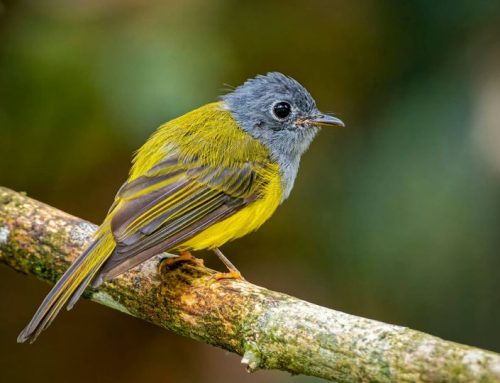
- Nilgiri Flycatchers are a sought-after sighting in the higher altitude shola forests in the W Ghats and the Nilgiris (India). (Vidjit Vijaysanker)

Sword-billed hummingbirds are the sole member of the genus Ensifera and are found in the higher elevations of Bolivia, Colombia, Ecuador, Peru and Venezuela. (Frank Thierfelder)

“Warm heart” Fire-tailed myzornis prefer subtropical or tropical moist montane forests in Bhutan, China, India, Myanmar, and Nepal. (Soumyajit Nandy)

Sarus cranes are non-migratory in the wetlands and uncultivated lands of the Indian Subcontinent, SE Asia and Australia. (Shreya Singha Ray)

“Special blue” Mountain bluebirds prefer the open, mountainous country across W North America as far N as Alaska, and is the “state bird” of Idaho and Nevada. (John Carlson)

“Landing gear” Sharp-tailed grouses are found throughout the remaining American prairies in the USA and Canada. (John Carlson)

“Blue flash” Malachite kingfishers are small kingfishers that sit low to the water and feed on small fish, frogs and tadpoles throughout in Africa S of the Sahara. (Trevor Kleyn)

“Forest flames” Flame bowerbirds are little-known and considered endemic to rainforests of New Guinea. (Markus Lilje / www.rockjumperbirding.com)

“Run baby run!” Ostriches are distributed throughout Africa up to the Sahel and have gone extinct in Arabia. (Chad Wright)

“Underground owl” Burrowing owls are considered Endangered in Canada, threatened in Mexico, and a “species of special concern” in Florida and most of the W USA. (Salah Baazizi)

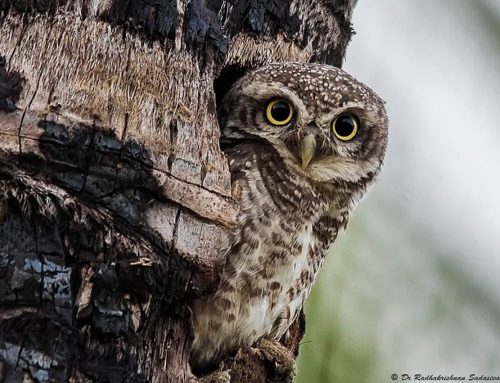
“Newest owl” Serendib scops owls were formally described as a new species in 2004 after being observed for the first-time on 23 January 2001 in Sinharaja (Sri Lanka). (Sabu Kinattukara)

“Spike fan” Greater sage-grouse or “sage grouse” prefer the sagebrush habitat of W United States and S Alberta and Saskatchewan (Canada). (John Carlson}

“Purple hovering” Violet sabrewings prefer the the understory and edges of mountain forests near permanent streams of S Mexico and Central America all the way S to Costa Rica and W Panama. (Jenny Alvarado)

“Wattled runner” Yellow-wattled lapwings are endemic to the Indian Subcontinent, preferring the dry, sandy plains of the peninsula. (Hemant Kumar)

“Snail cracker” Asian openbills prefer inland wetlands and are widespread and abundant in India, Sri Lanka, Burma and Thailand. (Hemant Kumar)

“Ascending angel” Elegant tern are named for their delicate beauty and breed on the Pacific coasts of the S USA and Mexico, wintering S to Peru, Ecuador and Chile. (Salah Baazizi)

“Dark rose” Dark-breasted rosefinches prefer the boreal forests and subtropical or tropical high-altitude shrubland in Bhutan, China, India, Laos, Myanmar, Nepal, Pakistan, Thailand, and Vietnam. (Dibyendu Ash)

“Metalworker” Coppersmith barbets prefer gardens, sparse woodland, and forest patches with sufficient dead wood for excavation throughout S Asia. (Deepansh Mishra)

“Yellow flash” American yellow warbler are common throughout the United States and N South America, but are declining throughout their dustributional range due to habitat loss and pesticides. (Agniva Das )

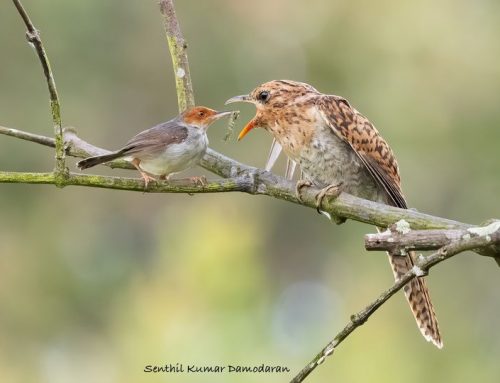
“Look-a-like” Common hawk-cuckoo are the same size and have a strong resemblence to the Shikra, both found on the Indian Subcontinent. Known as the “brain-fever bird” because of its repetitive call during summer. (Akshay Jadhav)

“Smart percher” Ultramarine flycatchers are a small arboreal Old World flycatcher that breeds in the foothills of the Himalayas and winter in S India. (Akshay Jadhav)

“Shy myna?” Asian pied starlings prefer the open plains and low foothills of the Indian subcontinent and SE Asia, moving around in small groups that forage together. (Arindam Saha)

“National parrot” Cape parrots are endemic to South Africa’s yellowwood forest along mountain ranges with south-facing slopes in S and E South Africa. There are less than 1,000 remaining in the wild. (Rodnick Clifton Biljon)

“Little beauty” Chinspot batis can be found in wooded habitat throughout S, central and E Africa in found in Angola, Botswana, Burundi, Republic of the Congo, Democratic Republic of the Congo, Gabon, Kenya, Lesotho, Malawi, Mozambique, Namibia, Rwanda, South Africa, Sudan, Swaziland, Tanzania, Uganda, Zambia, and Zimbabwe. (Chad Wright)
The Wild Bird Trust would like to thank Swarovski Optik for helping to make the “Top 25 Wild Bird Photographs of the Week” a possibility! Go to the new Wild BirdTrust website for a chance to WIN a pair of amazing Swarovski binoculars by donating $10!
See last week “Top 25 Wild Bird Photographs of the Week #65″:






























I appreciate wholeheartedly !
Your posts are amazing, is it possible to submit my images to your site?
Is it possible to add EXIF details to every image you have selected in best 25??
Thanks for sharing these wonderful pictures of birds from all over the world,they enrich our lives by their presence.
I love birds of different kinds and i like seeing them glide in the air as they fly… without these birds, the beauty of the earth is not complete..
Thanks a lot for selecting my picture.
If you sent an e-mail to every one then it will be great.
Thanks for sharing, such a pleasure to the eye and mind…
Beautiful !! Thank you for sharing
Thanks for posting these pictures. Wonderful!
Thank you for selecting my picture. Happy birding
http://Www.lonelytwitcher.com
behold the beauty of life…. i have never seen anything more beautiful!!
Thank you…Pictures are gorgeous..love the captions…very informative…